
Wellness and Self-Care for MALO CHWs
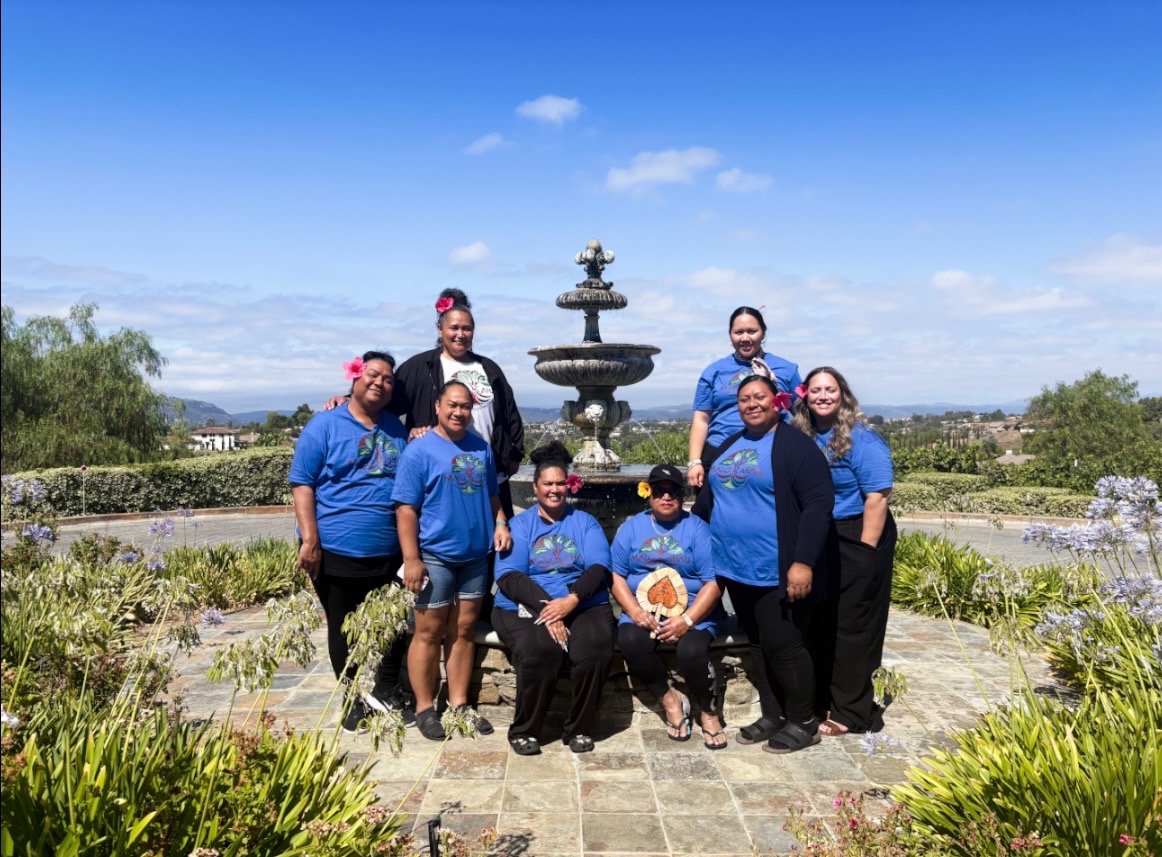
The Motivating Action Leadership Opportunity (MALO) Community Health Workers (CHWs) are a small but mighty group of leaders serving the Tongan American community in the Inland Empire. For many families, resources and information can be difficult to access, and language barriers can make navigating systems like healthcare and public services overwhelming. Because of this, MALO’s CHWs serve as the bridge between the community and these systems.
The work of MALO is part of a long tradition. CHWs have existed for decades as trusted community members who connect communities and healthcare systems. According to a report written by the NIH, the role emerged from grassroots public health movements in the 1960s that trained local residents to share health information and guide low-income and migrant worker communities toward essential resources (Pérez & Martinez, 2008).
Community Health Worker Annie Vave explained that the team carries a significant responsibility. Their work includes organizing vaccine and COVID-19 clinics, coordinating food deliveries, planning community events, and connecting families with essential services.
Lolofi Soakai, the founder and executive director of MALO, said the team often faces both physical and mental exhaustion as they work to meet the growing needs of the community. Given these challenges and the limited number of Tongan-American-serving organizations in the area, many Tongan-American community members experience chronic stress and barriers to care. As a result, the trust placed on MALO and its CHWs is immense, but with that trust comes pressure: “Mentally, it’s heavy too, because as the only Tongan-led, Tongan-serving org, you get all of that put on you,” Soakai explained. “Everybody’s asking you, ‘Teach my kid this. How do I use this?’ And then you’re just like, I don’t even know… And then you have to… buckle up and keep your shoulders up.”
The lack of Tongan-serving organizations makes the role of MALO even more important. When gaps appear in services or information, the CHWs often rise to meet those needs. CHW Asena Taione-Filihia described MALO as a “genuine space”: “It’s a space that I love, and I protect,” Taione-Filihia said. “Everybody rises to the occasion when they’re needed.”
Working at MALO also provides a great deal of strength and support for the CHWs themselves. Taione-Filihia said she sees MALO as a second family: “I feel like it’s that tight-knit family dynamic that makes MALO feel like home,” Taione-Filihia said. Annie Vave, another CHW, said that community support also plays an important role, whether they gather for activities like Zumba or share health information, adding that the community comes through for each other and the organization: “We have a really great community that comes and supports us, whether it may be from Zumba or connecting our community through vaccines, especially through COVID.”
As Tongans themselves, the CHWs are uniquely situated as both members of the community they are serving and those providing service to it. Therefore, they have a deeper understanding of community needs, especially when it comes to identifying accessible resources, as Soakai explained.
For Vave, service is a form of love, and she enjoys having the opportunity to give back when she can: “My love language is service. Being able to help our community and connect them to resources and support they need means everything.”
This intrinsic motivation for MALO’s service work fuels the work of the CHWs dealing with obstacles or difficult days. Alongside the family-like support of one another and their community, their passion for caring for others provides them with the resilience needed to keep them going.
The CHWs play a critical role not only within MALO but throughout the Tongan American community in the Inland Empire. Their work strengthens connections, improves access to health care, and helps families navigate complex systems. But this work cannot happen alone. MALO relies on the continued support of the community to continue and expand their efforts. Community members can help by donating, volunteering, sharing resources and information, and contributing to MALO’s effort to promote access to health care for all.
References:
Pérez, L. M., & Martinez, J. (2008). Community Health Workers: Social Justice and Policy Advocates for Community Health and Well-Being. American Journal of Public Health, 98(1), 11–14. https://doi.org/10.2105/AJPH.2006.100842
