
Barriers in the Healthcare System
“We’re definitely not used to that in our culture, in our community, all these types of good resources aren’t really shared with us… So we’re trying to teach them, like they are for us and they are good.” — Annie Vave, MALO Community Health Worker (CHW)
In our talanoa dialogues, MALO community health workers and staff reflected on the financial hardships that many Tongan community members face when navigating the healthcare system. Although some families have insurance, the cost of care, from copays to uncovered services, continues to create barriers in accessing health services. As student volunteers with Health Bridges, we were deeply impacted by the stories MALO leaders shared about the financial and language barriers their communities face, as well as issues related to data disaggregation. Their commitment to pushing for more equitable and affordable healthcare systems for Pacific Islanders motivates us to listen, learn, and stand in solidarity with their work.
The burden of healthcare costs continues to weigh heavily on many families, even those with insurance coverage. ‘Asena Taione-Filihia, the Director of Development of MALO, describes how the gap between having insurance and actually being able to afford care creates ongoing cycles of hardship: “It’s one thing to have healthcare, but if it’s not affordable for you and your family? Feels like it’s another cycle to get caught up in?” Despite doing everything “right” by securing coverage, families often find themselves trapped in a system that still demands significant out-of-pocket payments. The emotional and financial stress of navigating healthcare expenses places additional financial and caregiving strain on families, especially in multigenerational households where needs are multiplied across several members.
Lolofi Soakai, the Executive Director and Founder of MALO, echoes this point by highlighting how structural barriers make affordability an ongoing struggle: “Even though they have the benefits, they have their insurance…you have to pay the copay. So, if you have a lot of kids, that copay adds up…if you ain’t got the money, you ain’t got the money.” Employment-based insurance models and rising copay costs disproportionately burden families who already face systemic inequities. These reflections from CHWs reinforce that genuine healthcare access cannot be measured by coverage alone; it must also address the real-world affordability that determines whether families can actually use the care available to them.
In the recent health assessment conducted during the fall of 2024, which received 92 responses from Tongan Americans in the Inland Empire, 76.7% of respondents reported they were unable to access the medical care they needed, showing that systemic and financial barriers remain present for more than three quarters of the community. To address these barriers, community members have taken it upon themselves to fill these gaps. CHW Sepiuta Siasau explains, “We’re trying to get… our community to have decent healthcare conversations—how they would go about it, how to apply, how to renew it, and what letters to look for.” These efforts to translate, simplify, and teach the healthcare system reflect the community’s effort and resilience to combat these challenges.
At the same time, community leaders understand that without greater and accurate visibility in health data, systematic change will remain out of reach. The erasure of Pacific Islander health disparities within the broader AAPI category has hidden the true needs of the community. Lolofi explains, “We had to go against public health too and be like, Hey, you gotta… disaggregate this…when you group us with AAPI, you’re not even seeing our true numbers…Once they did, they saw that the Pacific Islanders were literally getting sick and dying faster than everybody else, and no one knew.” Community leaders recognize that without accurate information, Pacific Islanders, including Tongans, are overlooked in resource allocation, grant funding, and crisis response. Measurements and statistics are particularly important in communicating community needs to an external audience, thus making quantitative data focused on Pacific Islander communities critical.
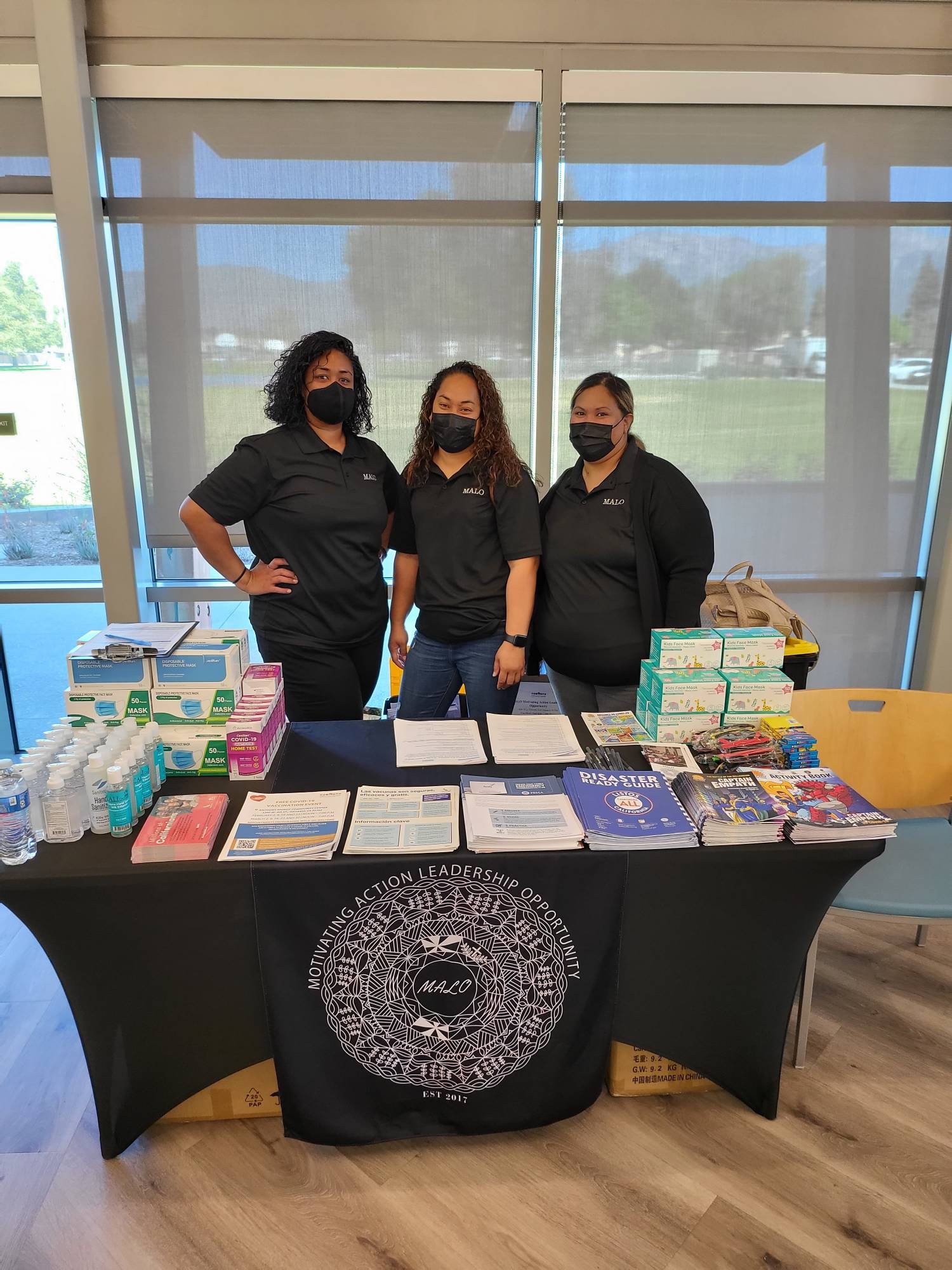
Despite these barriers, the Tongan community persists by educating and empowering one another. MALO, in particular, works to support the Tongan community in the Inland Empire through providing free vaccine and dental clinics, social needs resource distributions, youth cultural mentorship and programming, and zumba socials. If you support MALO’s efforts, please contact info@malotongaie.org.
